
Build a Gainesville People Search
The best first record depends on the fact already in hand. A street address points toward Hall County assessment and GIS data. A name tied to a dispute points toward the Hall Courts docket. An older Gainesville address may work better in a scanned city directory. Family events split again: probate files can name heirs, while birth and death certificates follow Georgia's direct-interest rules.
No single Gainesville search spans all systems. Names change, initials replace given names, and a postal Gainesville address may sit outside city limits. Keep each case number, parcel number, book and page reference, or document ID. Those stable keys make a later counter or copy request precise.
A name-only result needs care. Compare middle initials, event dates, spouse or relative names, and the role printed on each record. An assessment owner may not live at the parcel. A business agent may only accept legal papers. A court party may share a name with someone else. Gainesville records become useful when their dates, roles, and identifiers agree, not when a broad name match merely looks familiar.
Keep a short source log as the search grows. Note the office, portal, search terms, access date, result identifier, and any spelling that failed. Public databases refresh on different cycles, so two accurate sources can show different dates. A saved identifier lets the custodian reproduce the search and helps explain why a later result changed.
- Record the exact name, variants, date range, and known Gainesville or Hall County address.
- Choose the record tied to the event: deed, case, parcel, estate, license, or directory entry.
- Search the official index and save its stable record number, not just the name hit.
- Open the public image or ask the custodian for the file when the web result is only an index.
- Compare the result with a second independent record before joining two same-name entries.
Gainesville People Records Keepers
Three offices form the core of a Gainesville people search. The Hall County Clerk maintains court and real-estate records. The Board of Tax Assessors administers parcel data. Gainesville's records specialist receives city requests. Detailed access rules and copy procedures appear with Gainesville public records.
Hall County Clerk
225 Green Street SE
Gainesville, GA 30501
770-531-7025
Hall Courts gateway
Search Gainesville Court Parties
The Hall Courts gateway separates Superior and State Court access from Magistrate Court. Superior Court handles general civil cases, felonies, divorces, and title matters. State Court includes misdemeanors, traffic, and civil jurisdiction. Probate Court handles estates, wills, guardianships, and marriage functions.
A docket is a timeline and index, not the complete file. Save the case number, then ask the correct Clerk division for public complaints, orders, judgments, or petitions. Sealed matters, juvenile records, adoption files, and protected details remain restricted. The public counter is the fallback when an online entry lacks images or older material.
| Court | Covers | Name Search | Access |
|---|---|---|---|
| Hall Superior and State | Civil, criminal, divorce | Hall Courts | Web gateway and Clerk |
| Gainesville Municipal | Ordinance and traffic | No full index verified | Counter or request |
| N.D. Georgia, Gainesville | Federal cases | PACER | Account or federal counter |
The official Hall Courts front door shows the court-specific paths.
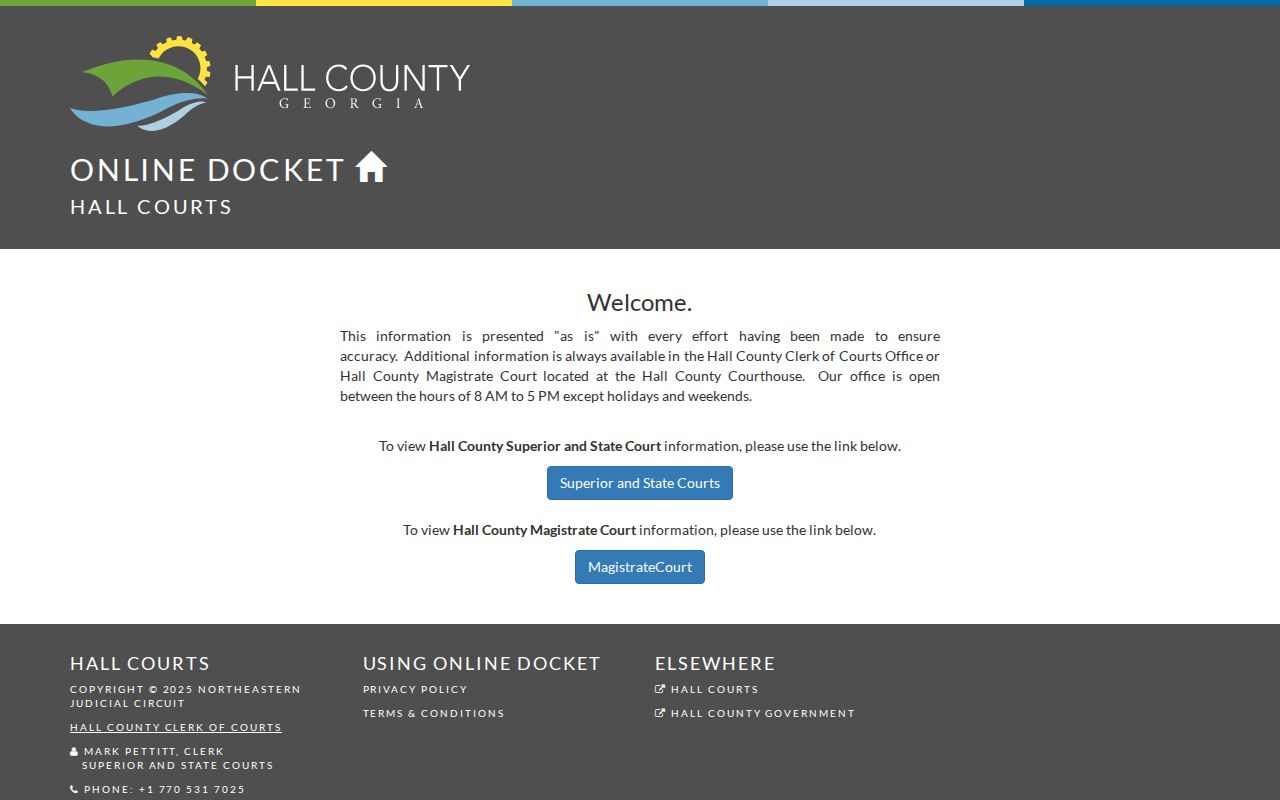
Use the gateway to find a case number, then request the public filings needed to interpret it.
Order Gainesville Vital Records
Georgia vital records are certificate products, not open name browsers. The Georgia Department of Public Health holds birth and death records from January 1919 forward. O.C.G.A. §31-10-26 requires the proper direct and tangible interest. A requester supplies identification, a signed application, event facts, relationship, and proof linking the requester to the person when needed.
State marriage holdings cover June 1952 through August 1996, with verification from January 1, 2014. Other years route to the issuing Probate Court. Divorce decrees come from Hall Superior Court. Earlier family research may require probate, church, cemetery, newspaper, county, or Georgia Archives sources. No fixed Georgia rule opening every birth after 100 years or death after 50 years was verified.
The DPH birth request page states current eligibility and application requirements.
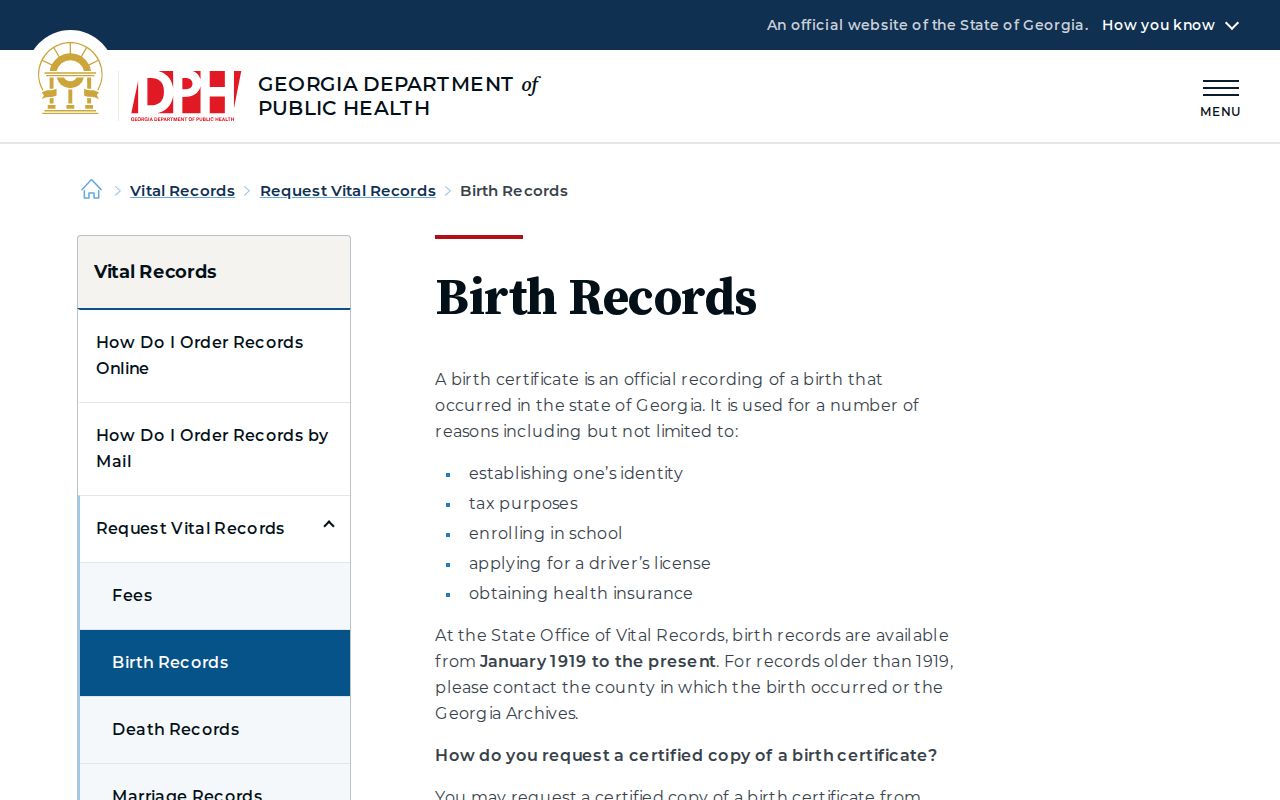
Check the live method page before ordering because processing and delivery choices can change.
Search Gainesville Deed Names
Recorded land documents create a long name trail. The GSCCCA search hub routes Hall County deed, lien, plat, UCC, and notary research. A grantor transfers an interest, while a grantee receives it. Book, page, and instrument references lead to the recorded document. Hall County says its real-estate holdings reach back to 1818, but the exact online index start was not published.
Use the Clerk counter when the gateway does not expose an image or older entry. A plain image serves research; GSCCCA eCert and the Clerk provide certified copies. The official hub shows how Georgia groups these record searches.
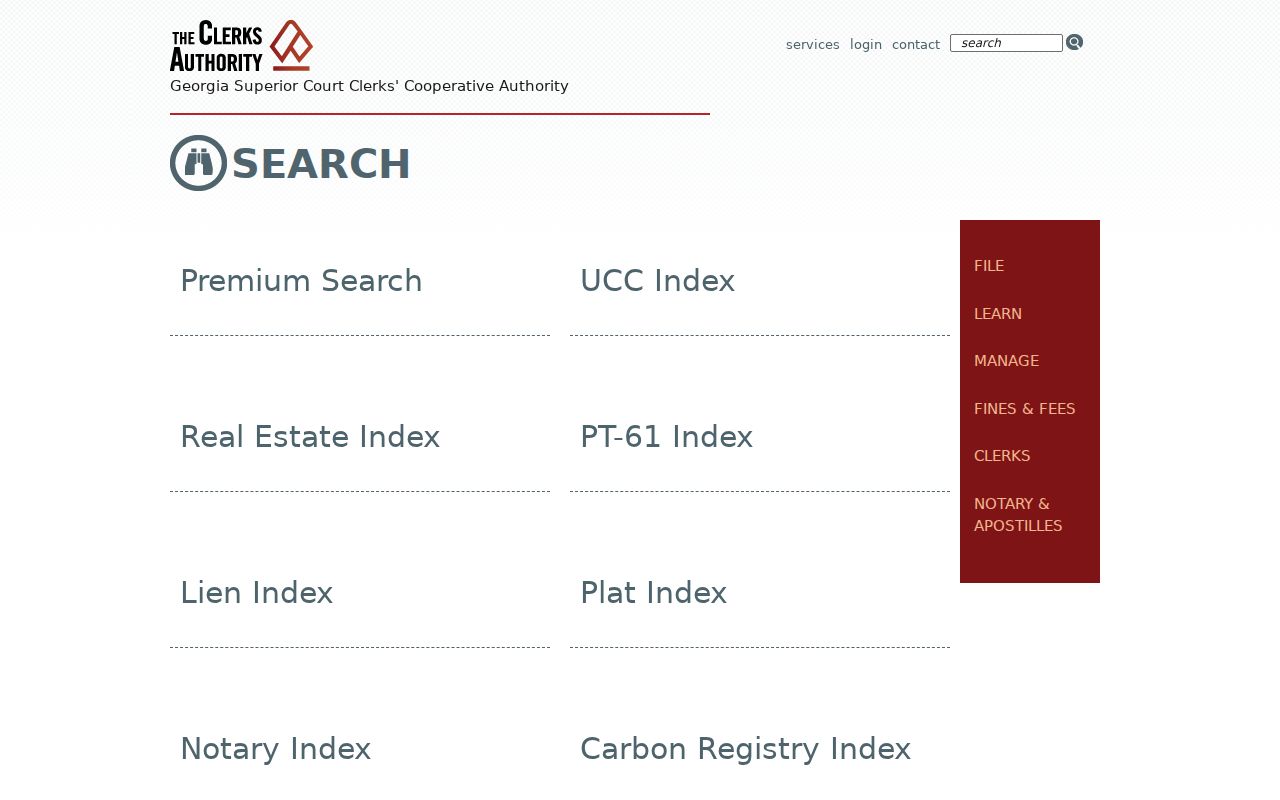
The hub is a gateway, not proof that every Hall County image or year is available online.
Read the index role before drawing a conclusion. A grantor entry can mark a sale, gift, correction, security deed, release, or another recorded act. The instrument type and date explain why the name appears. Search spelling variants and both sides of a transaction, then open the document to see the legal description and stated parties. If an old deed refers to a plat, estate, or prior book and page, follow that reference as a separate record trail. The current tax owner may differ from a midyear buyer because Hall assessment records use January 1 ownership for the tax cycle.
Follow Gainesville Property Records
An address can bridge a street to an owner label. Hall County's official GIS gateway links qPublic assessment and sales information with parcel, aerial, zoning, contour, flood, utility, and future land-use layers. The county says qPublic updates weekly. Save the parcel number, situs address, mailing address, owner label, and legal description as separate facts.
- Situs
- The physical parcel location.
- Mailing address
- The destination for tax mail, which may differ.
- Parcel
- The assessment account connecting map, value, and tax data.
- Plat
- A recorded survey drawing of lots and boundaries.
The service-map page illustrates the official Gainesville and Hall County layers.
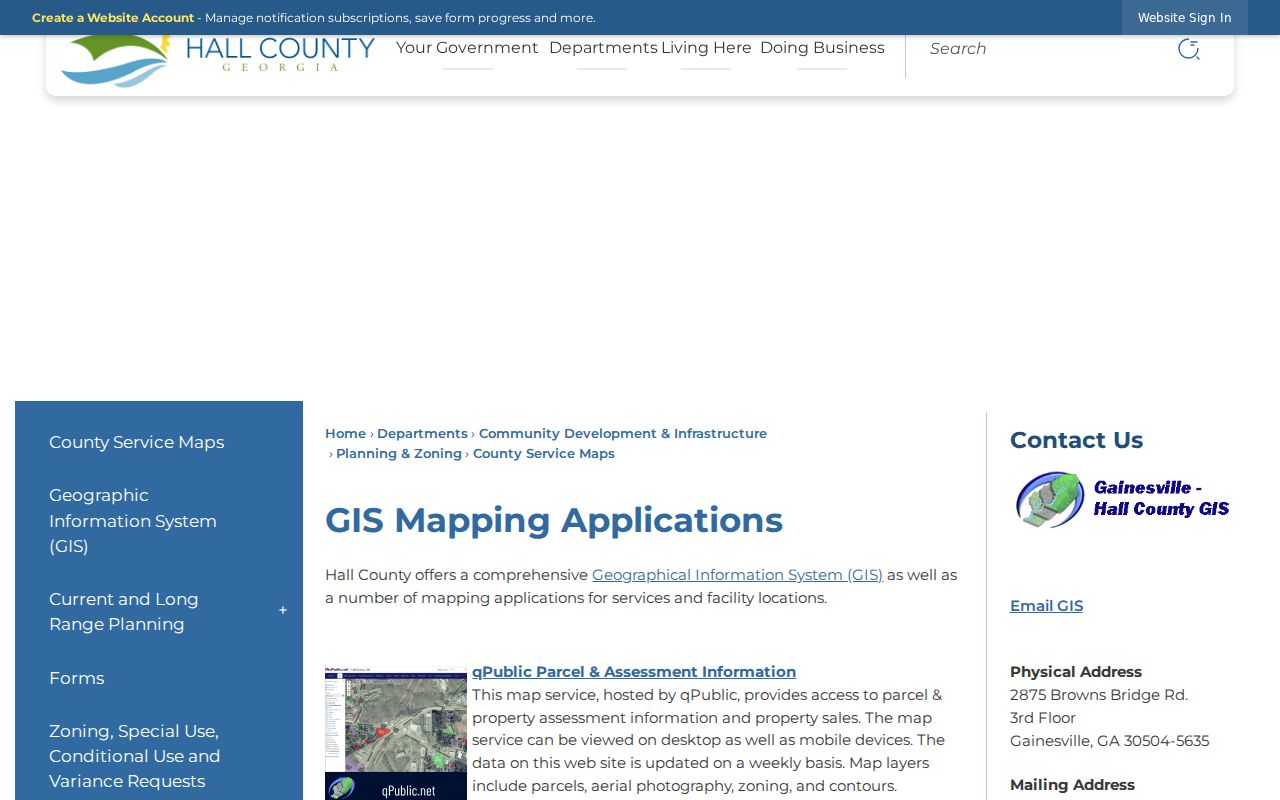
Map data locates the asset. A deed records a transfer, and neither source alone proves current occupancy.
When the modern address fails, preserve its original spelling and try the parcel or legal description. Hall County assigns addresses for emergency response and development, while commercial maps can use different labels. A current situs may also differ from an older directory street name. Confirm city limits, record the parcel account, and compare the assessment map with the recorded plat. For family history, browse the nearest Gainesville directory year by street after locating the parcel. For a recent transfer, compare the deed date with the assessment snapshot instead of treating a name mismatch as an error.
Check Gainesville Voter Status
Georgia My Voter Page is an identity-verified self-service lookup, not a public surname directory. It asks for first initial, last name, county, date of birth, and CAPTCHA. A match can show status, precinct, polling information, districts, representatives, and current election material. A failed match can reflect spelling, county, date, pending processing, or maintenance status.
Public voter-list data excludes Social Security numbers, driver's license numbers, full birth dates, email addresses, and protected residences. The captured screen makes the credential fields clear.
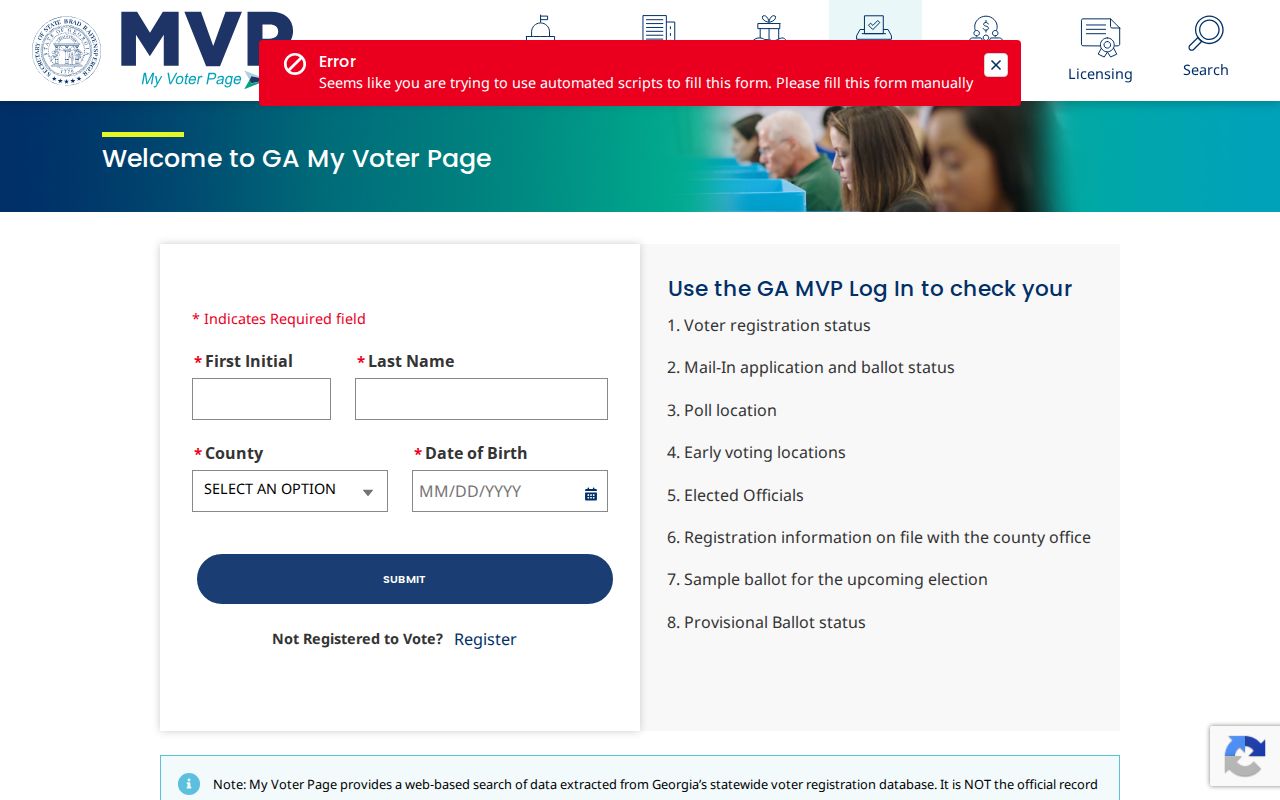
Hall Elections is the fallback when a qualified voter cannot resolve a result through MVP.
Link Gainesville Business Names
The Georgia Corporations Division search connects people to filed business roles. Search modes include business name, control number, registered agent, officer, and designated agent. Begin with a name prefix, then use contains for punctuation or legal-ending variants. The control number is the stable key.
| Gainesville search field | Meaning |
|---|---|
| Registered agent | A service contact named in a filing |
| Officer | A recorded role tied to the entity |
| Business name | The entity and control number |
| Control number | The exact Georgia entity record |
An agent is not necessarily an owner, and filings can lag changes. For licensed occupations, professional license verification searches profession, license type, partial name, or license number.
Open the complete entity record rather than relying on a result line. Status, formation jurisdiction, principal office, registered office, agent, and filing history answer different questions. An officer search is a strong person-to-entity link only for the role and date reported. Professional verification works best when profession and license type narrow a partial surname; the state's own advice is to enter less when a spelling is uncertain and use its supported wildcard. A license result shows board status, not a promise that a published office address is the person's home.
Use Gainesville Custodian Fallbacks
Online gaps are normal. Hall County moves most general intake to NextRequest on July 1, 2026, but Courts, Elections, the Sheriff, and Environmental Health keep separate routes. The change affects intake, not custody. Under the Georgia Open Records Act, an agency must produce records or give a time, cost, and exemption response within three business days.
Ask for an existing file, export, log, or register. Agencies need not create custom analysis. The Hall County routing page identifies current paths.
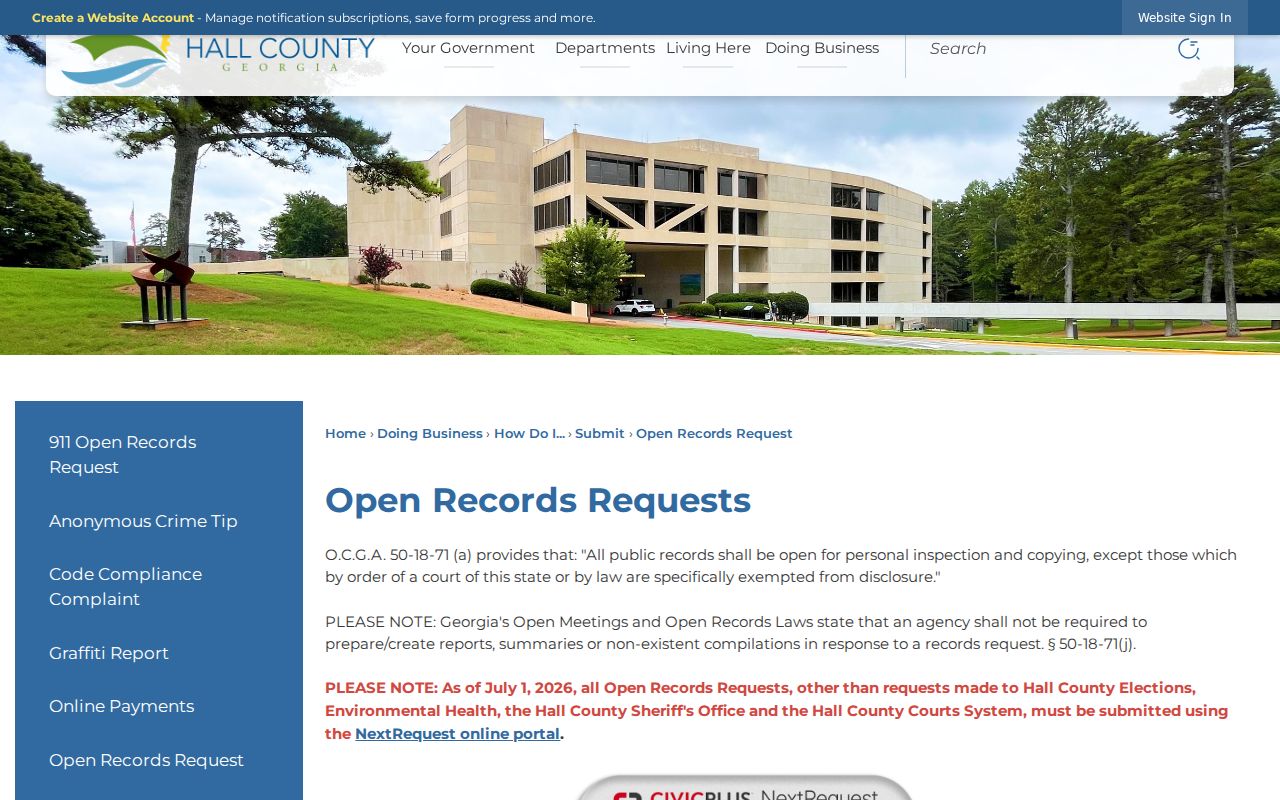
The general portal then supplies a submission front door for departments not carved out.
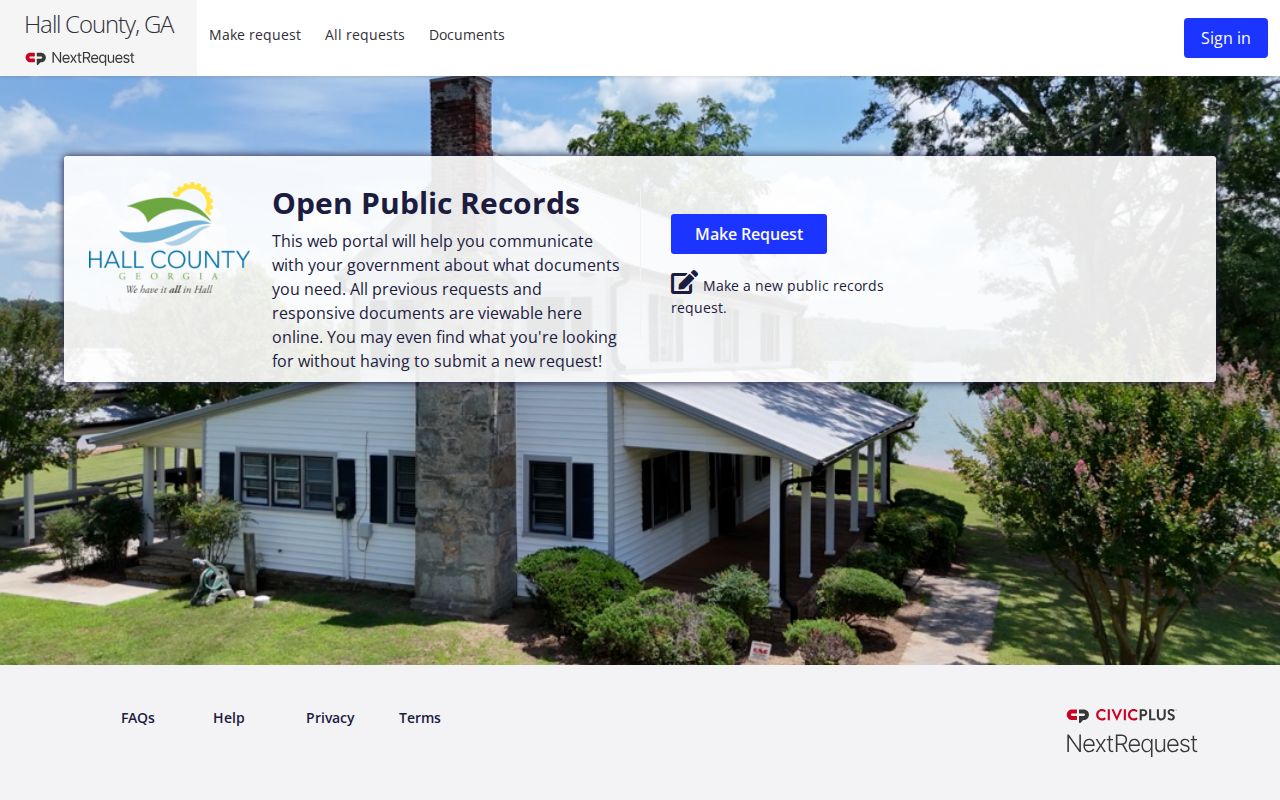
Keep the confirmation and date while old forms remain in saved links and search results.
A focused request names the custodian, record series, people or addresses, date range, and preferred electronic format. State whether inspection is enough and set a cost ceiling that requires notice before work continues. The first 15 minutes of search and retrieval are free, but longer review, redaction, or retrieval can be billed at the rate of the lowest-paid qualified employee. Ordinary paper copies are generally ten cents per page. If material is withheld, ask for the exact Code provision. A large request may receive a lawful estimate and production date within three business days rather than all records at once.
Verify Gainesville Custody Results
The Hall County inmate list routes to Sheriff-to-Citizen and refreshes every 15 minutes. It is a current-custody tool. Absence can mean release, transfer, spelling differences, or timing. The Georgia Department of Corrections covers state offenders, while VINE supplies notifications after a known match.
Arrest, charge, conviction, and incarceration are distinct. Confirm web output with the agency or court file. Registry access also carries source-accuracy warnings and strict anti-harassment limits.
The Georgia Department of Corrections search can use a name, physical description, ID, or case number. Its public results may include age or birth year, county, offense, sentence, and release eligibility, subject to exclusions. A common-name result is not fingerprint confirmation. Hall police and sheriff incident records may also redact victim, juvenile, medical, investigative, or protected identity data. Supply the event date, location, report number, and involved name when requesting a specific public report.
Lawful use only. Use Gainesville records for legitimate personal research and civic transparency. Never stalk, intimidate, or harm anyone.
Gainesville Records Survived Fire
Hall County was created in 1818. An 1851 fire burned the town and courthouse, but residents saved official records. Hall should not be treated as a wholesale burned county. Individual series can still have gaps, so check the Clerk inventory and Georgia Archives county cards before assuming a record never existed.
The 1936 tornado caused a different break in the address trail. It damaged downtown civic buildings, and a recovery complex followed. Hall Library photographs can explain why a storefront or street scene changes between directory years. Building loss is not proof that a whole record series vanished.
Use the date of each source, not just its name. A directory reflects a publication cycle, a tax roll reflects an assessment date, and a docket reflects filings entered by the clerk.
Lake Lanier changed the landscape again in the 1950s. Older roads and communities may not align with a current parcel map, so a legal description, plat, directory street section, or county microfilm can be more reliable than a modern geocoder. The railroad and textile era also shifted how places were labeled. A Gainesville resident may appear under a mill village, employer, or rural community rather than the city name expected today.
Trace Historic Gainesville People
The Digital Library of Georgia holds 17 full-text Gainesville directories, about 5,500 pages, from verified issues spanning 1882 through 1960. Entries can show residents, spouses, work, businesses, and addresses. The 1918 street department reverses the search: begin with an address, find occupants, then open the alphabetical entry.
Search OCR with surname variants and verify the scan. Old type and initials create misses. Chicopee, New Holland, and Gainesville Mill should be searched as communities. The Hall Library collections add photographs, postcards, Black History Society material, and tornado images. These sources connect a name to its time and place without treating an old entry as a current address.
Compare adjacent directory years to bracket a move, marriage, widowhood, occupation change, or business opening. Then use the reverse street list for neighbors and the alphabetical list for the fuller entry. Directory absence is not proof that a person left Hall County. The canvass may have missed an outlying home, used initials, separated a mill community, or closed before the move occurred. Preserve the scanned page and publication year so another researcher can test the same conclusion.